
That’s enough to stop anyone in their tracks. I was an agency junior designer many years back when an experienced copywriter colleague said this to me.
It wasn’t about anything I’d done or any types of swearing you might be imagining.
They said, “It’s about matching what you say to who you’re speaking with.”
And that still resonates with me to this day.
So here’s a question I’ve been wondering: in a world of CEO, CFO, CMO, COO, does anyone know what a CBO is? Do you?
We know that the Chief Executive Officer (CEO) sets the direction and decides what matters most. And then we have the Financial (CFO), Operating (COO), Marketing (CMO) versions and even People (CPO) versions of these Officers.
But the Chief Brand Officer (CBO) is a bit different.
What the CBO actually does
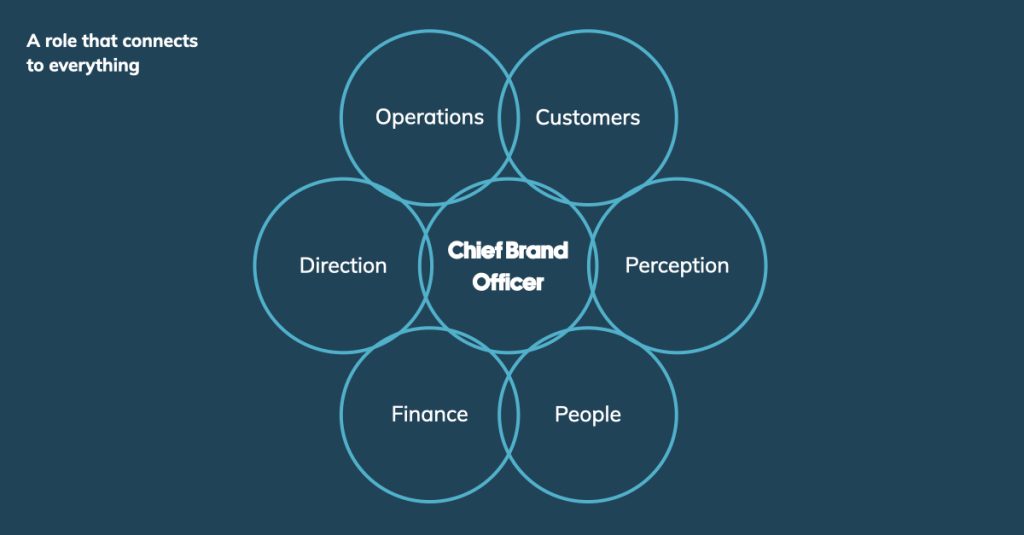
While a CMO drives demand and gets people to notice and buy, a CBO looks at the entire system.
They work with HR during hiring, making sure recruitment aligns with values, not just filling seats. Then tying in the recognition and reward based on the values to keep people.
They sit with finance to measure brand equity, not just revenue. What’s the reputation worth? What assets have been built beyond the balance sheet?
They’re in the boardroom when direction gets set, ensuring clarity on identity, direction, purpose, not just reacting to whatever’s loudest.
They work across teams to make sure everyone who shows up each day carries the brand in a way that feels real.
It’s not marketing work. It’s culture work. It’s leadership work.
But are we ‘minding our language’ and overcomplicating it?
Some people fully brand themselves as Chief Brand Officers. Others quietly avoid the title because nobody knows what it means. One person recently said they still call themselves a ‘strategist’ when talking to clients. Another is looking at Chief Marketing Officer roles instead, because at least people understand what a CMO does, unlike a CBO.
The title matters less than the impact. But the role? That’s essential as the gap we see.
Here’s what the gap looks like
The website says “we care about people,” but the team is burned out and nobody’s listening to what actually matters.
There are values splashed across the walls, in the induction books, but nobody rewards the behaviour that matches them.
Hiring is happening fast but the wrong people keep getting through and the good people are leaving.
Even the customers feel the disconnect as the team can’t hide their frustrations and feelings.
That’s when good people start drifting. That’s when trust goes thin. That’s when Sunday nights feel heavy with the dread of Monday calling.
What changes when you bridge the brand and culture gap
Teams stop asking “Why are we doing this?” The direction is clear and the team understand where things are going and why it matters.
Monday mornings feel lighter. Less stress. Less dread. Less churn. More momentum.
Good people stay. They want to be part of what’s being built and believe in the cause.
New hires fit. Recruitment happens for values. The right people show up and stick around because they care.
Customers tell better stories. What you say matches what you’re building. Your team believes it and so do your customers, and they tell others about you.
Leadership feels confident again. Less reacting with a smoother decision-making process led to no second-guessing, as everyone is aligned.
That’s what alignment does, yet doesn’t happen overnight, but when it lands, everyone feels it.
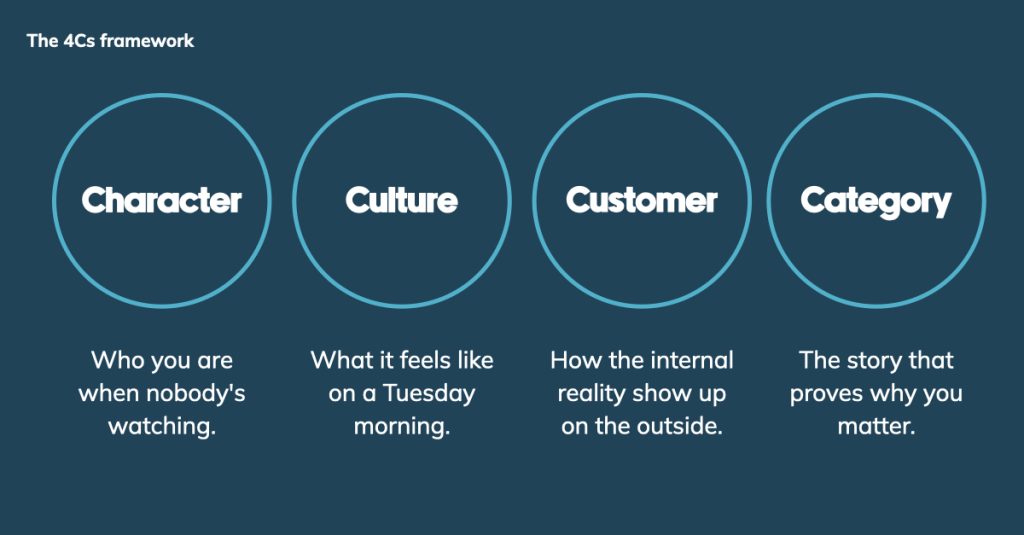
How the 4Cs question framework fixes the gap
Character: Who you are when nobody’s watching. The personality, the tone, how the organisation shows up. Is this clear? Or is everyone trying to be everything to everyone?
Culture: What it feels like on a Tuesday morning. Do values show up in actual behaviour? Does the team feel seen, safe and trusted? Or is there a gap between what’s on the wall and what’s real?
Customer: How the internal reality show up on the outside. Is it clear who the organisation exists for? Is the promise clear? Do customers feel what you say you stand for?
Category: The story that proves why you matter. How is the organisation different from everyone else? And does that difference actually matter to the people you serve?
When these four align, brand and culture work together. When they don’t, the drift shows up everywhere.
Principles that guide the work
Radical Care: Teams perform better when they feel seen and safe, not managed and measured.
Liberating Leadership: The best leaders make space for people to lead, then step back.
Curious Challenge: Simple questions open truth. Complex ones create confusion.
Evidence & Empathy: Numbers show where the problem is. People tell you why it matters.
Leave It Better: Every project. Every person. Every time.
There’s no shortcuts as real change takes real work, done properly.
That means listening before designing. Co-creating with teams, not imposing from the top. Measuring what matters, not just what’s easy to count. And staying until the work sticks.
Why fractional can make sense
Most organisations can’t afford a full-time Chief Brand Officer. Fractional changes that.
A fractional CBO taps in when culture’s drifting. Works with the senior team for a set period. Helps create clarity on identity, aligns people around it, then steps back once it sticks.
No full-time salary. No politics. Just focused work where it matters most.
And because fractional means outside perspective, patterns get spotted before they become crises.
Does your brand on the outside match what’s actually happening inside?
If the answer is no, or unclear, that’s the gap.
And that gap has a cost. In turnover, trust and in the energy it takes to show up every day and pretend everything’s fine when it’s not.
The gap is fixable, but it takes someone who sees the whole system, not just the symptoms.

Ready to explore your best route? Take the ten-minute culture quiz. Or book a call and let's have a wee chat on how to move forward together.