
What the best brands are doing differently
(7 takeaways from the Brand & Culture event in London)
From Tinder’s double-dating to fibre boosting popcorn to avoiding AI sameness.
Here’s what I brought back from the two-day event.
Before I jump in, a bit of honesty. I took far too many notes, plus pictures, so if you want more detail on any of this, just grab a chat.
I was also nervous as hell going down to London. You step out of your comfort zone to attend these things and mix with people you’ve never met. It’s both exciting and terrifying at the same time.
The networking at this event was set up like a dating app. You create your profile, select your interests and the algorithm suggests who to meet. Then it’s up to you to connect and speed date your way around the room. Weird but cool at the same time.
I met strategists, marketers, storytellers, media and agency people, plus loads of others. Every single one of them, plus the speakers, were excited and relaxed to be there and genuinely generous. It felt less about showing off, more about adding value and making a real connection which is refreshing, honestly.
A lot of this is being talked about in marketing terms. But most of it is actually leadership and culture work.
Okay, enough of the warm human fuzzy stuff I hear you shouting, you just want some of the goods.
So here are 7 things I took away from the likes of Pepsi, Tinder, Spotify, Wrexham FC, Lucky Saint, Unilever and a load of others who are doing this well.
1. Contribution vs extraction with Culture
The question every brand needs to sit with honestly.
“Culture is something you contribute to. Not something you extract from.”
Brands that take from culture without adding anything back are increasingly visible. Especially to younger audiences as they see it immediately and they disengage just as fast.
The better framing is this: you can reflect culture, you can shine a spotlight on what’s already happening and you can amplify it. But you can’t manufacture it and you definitely can’t claim leadership has earned it.
The brands that get this right tend to be patient. They show up consistently, build genuine relationships and earn trust over time instead of buying it in a single campaign.
I see the same thing inside organisations. Leaders are trying to impose culture rather than contribute to it. It doesn’t stick for the same reason. Culture isn’t something you roll out. It’s something you build with people, not for them.
2. Authenticity is the only currency left
Said in different ways across both days, yet the message was the same.
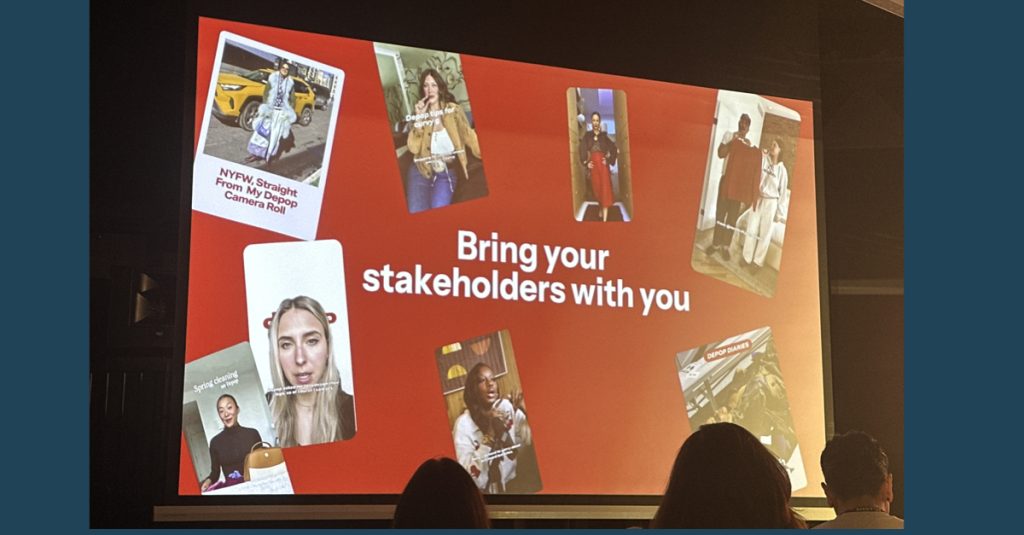
“The biggest disconnect: people in marketing use a playbook that no one believes in anymore. People on the street are living in a different world. They see through it.”
Dove used Reddit reviews of their products, including the negative ones, as TV advertising. Real voices, no gloss and it worked.
Crocs spent years trying to reposition as something more fashionable. A new CEO came in and stopped that. Instead, they embraced the product exactly as it was and built around the idea of comfort and self-acceptance. By 2017 they launched ‘Come As You Are.’ By 2018, fashion brands were coming to them.
Trying to be something you’re not is expensive, exhausting and increasingly doesn’t work. The brands getting real traction are the ones that know exactly what they are.
Most leaders know this intellectually. But when the pressure’s on, they still reach for the polished version. The safe version and the version that sounds like everyone else. That’s usually when the gap opens up.
3. Slow culture vs fast culture
A practically useful idea came from the Pepsi session. Spoke around the idea of a tree, with roots and leaves.
Slow culture: the deep-rooted values and beliefs that don’t shift quickly. The roots of the tree. Only operating here makes you invisible.
Fast culture: trends, moments, reactive content. The leaves. Only operating here makes you inconsistent and hard to trust.
“It’s not trend-jumping if you know your foundations.”
The brands navigating this well have both. A clear slow-culture foundation that gives them the confidence to move quickly when it matters, without losing themselves in the process.
Inside organisations, this usually shows up as leaders chasing trends without knowing what they stand for. Or the opposite, holding so tightly to heritage that they become invisible. As you can imagine, both are a problem.
4. Belonging is the real objective
Came through from Spotify, Tinder, Lucky Saint. Different categories with the same human truth.
“The world is an isolating place. Fandom offers the chance to connect and belong.”
A follower is an audience. A fan is a relationship. Those aren’t the same thing and they shouldn’t be measured the same way.
Lucky Saint built a run club that starts and ends in a pub. They’re not just selling alcohol-free beer. They’re enabling the social ritual that a pint has always been about.
Tinder’s double-date product came directly from Gen Z insight: they want connection, but low effort and with safety built in. The product is the strategy.
The brands winning right now are creating the conditions for belonging, not just awareness. The real question is: are people coming back? Are they bringing others with them?
Same question applies inside your business. Are people staying? Are they bringing others with them? If not, you’ve got an engagement problem dressed up as a retention problem.
5. Avoid sameness, especially with AI
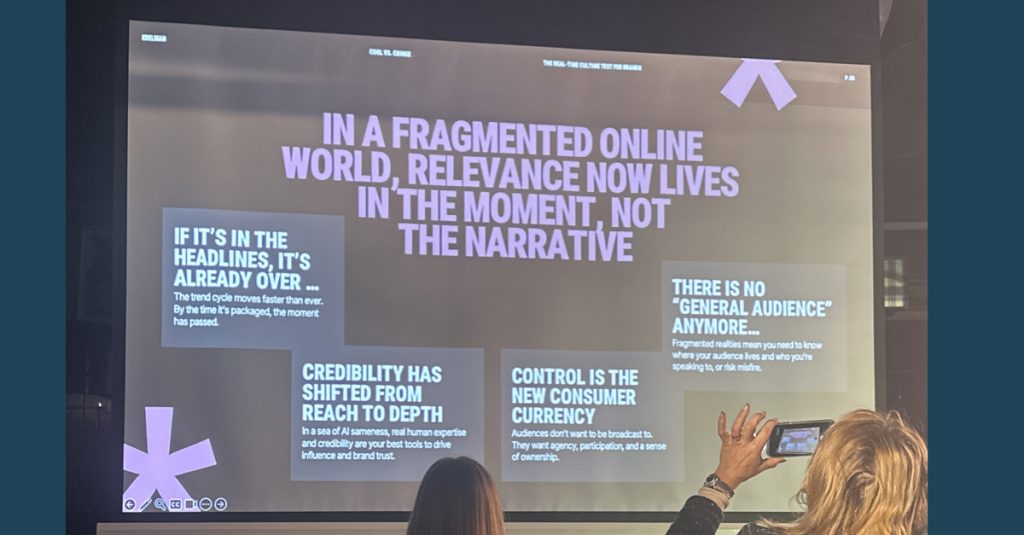
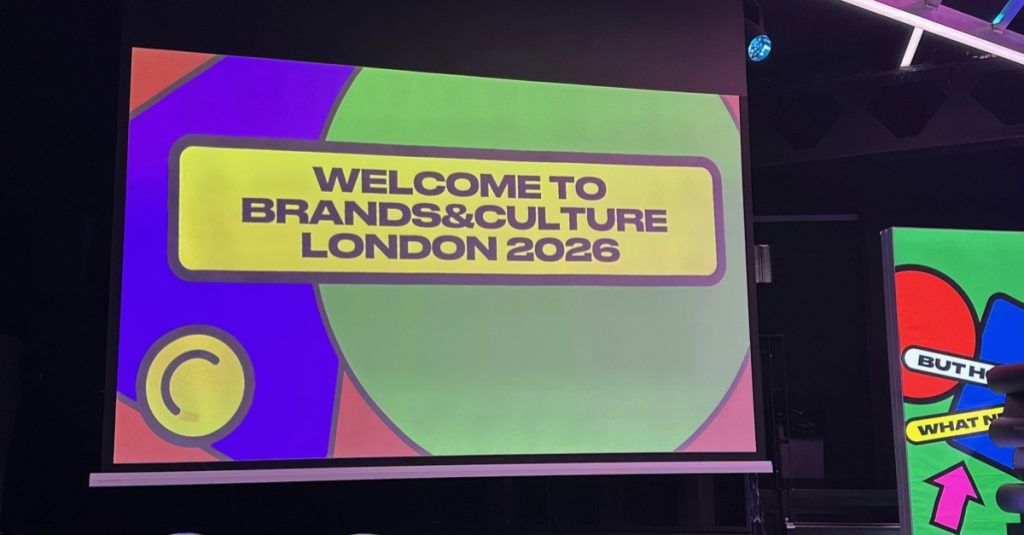
Why does every brand post look the same right now? AI is following the algorithm. The algorithm rewards sameness. Sameness kills attention.
“We’re scaling sameness. AI follows the algorithm. Following the algorithm creates sameness. Sameness creates an attention gap.”
Human-created content is commanding a premium. People are increasingly able to detect AI-generated work and respond less warmly to it.
The four things that create genuine difference:
- cultural intelligence (empathy, talking to actual humans)
- a catalysing idea (tight and ownable, not just ‘big’)
- craft (handmade, drawn, human)
- context (knowing when and where something lands, not just what it says).
The counter to sameness isn’t being louder. It’s being more specific, more human and more willing to own a point of view.
Sameness isn’t a creative problem. It’s a thinking problem. And it’s showing up inside organisations too. Every company deck is starting to look the same. Every value statement sounds identical. That’s not AI’s fault, that’s leadership playing it safe. The difference is when leaders are willing to show up with a bit more care and a bit more point of view.
6. Culture starts from within
The Wrexham session (I’m a bit of a fan boy here so I loved it)
“Be ambitious but kind.”
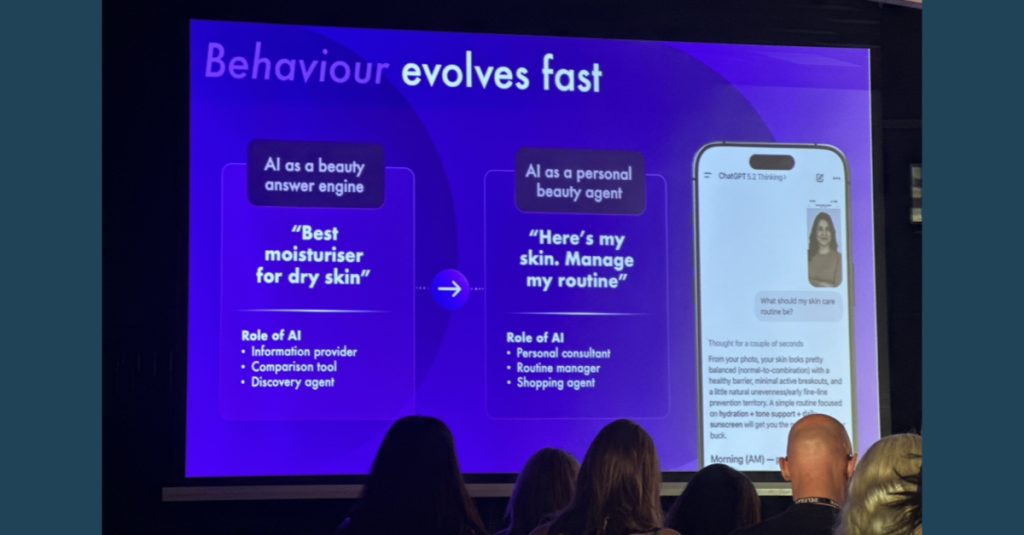
Before the culture work started, 80% of staff didn’t feel valued by the club. The turnaround wasn’t a rebrand. It was applied empathy and a simple test for every decision: does this make our community proud?
The external reputation followed the internal shift. It wasn’t built the other way around. Wrexham is now a tourist destination that put north Wales back on the map.
Fear leads to people sitting down. Feeling secure and supported gets them standing up. That applies to staff, communities, customers. All of them.
The external brand story is only as strong as what’s actually happening inside. Not a values poster on a wall. What leaders actually do when nobody’s watching.
Most leaders skip this part. They rebrand before they fix the culture. Then they’re surprised when the new messaging doesn’t land. You can’t brand your way out of a culture gap.
7. Build a world, not just a brand
The language of campaigns is starting to feel too small for what the best brands are actually doing.
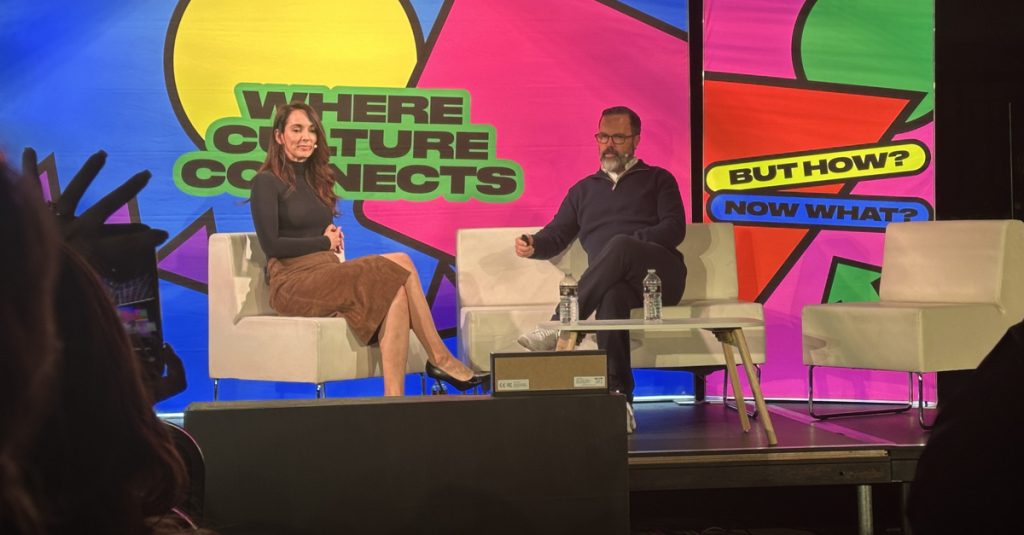
Move from campaign-first to editorial-first. Think like a publisher: what’s the ongoing story, not just the next activation.
Design for participation. Give people something to be part of, not just something to receive.
LookFantastic talked about measuring belonging: are people coming back? Are dormant users re-engaging? That’s the signal, not volume.
“Build a world, not just a brand. Consistency, genuine values and real creative courage.”
This is the bit that separates good brands from lasting ones. And inside organisations, it’s what separates leaders who build momentum from leaders who burn out chasing the next thing. Leaders and teams who know what they stand for and what they won’t tolerate become a force to be reckoned with.
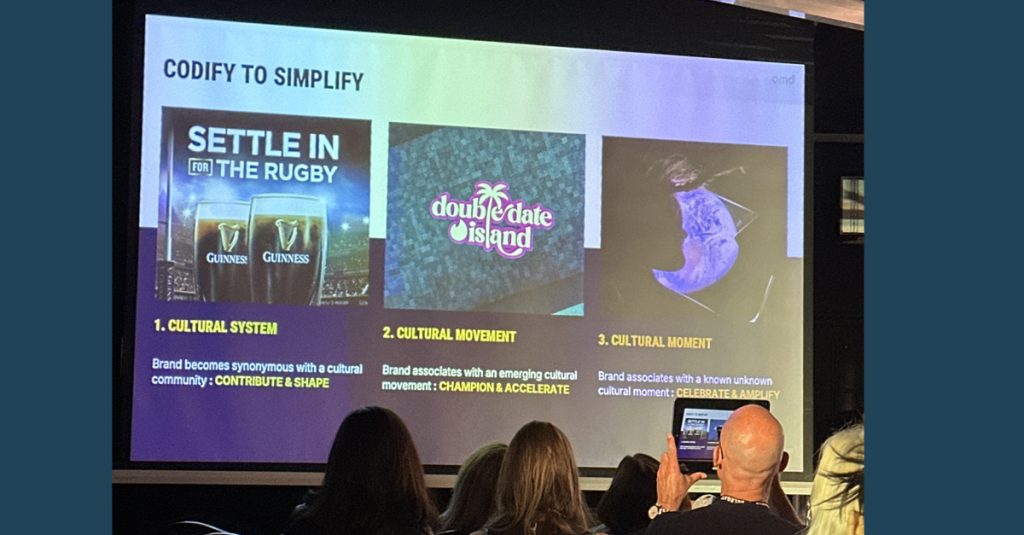
Here are a few lines I scribbled down that stuck with me:
“Show don’t tell.” Tinder
“Be a half step ahead with culture. Not behind it, not ahead of it.”
“Strategy is what you choose not to go into as much as what you choose to go into.”
“Context is AI’s Achilles heel. Cultural intelligence is a human skill.”
“Earn your place. Don’t buy it.”
“Emotional storytelling is from people’s perspective. The brand is their story, not yours.”
If you’re seeing any of this inside your own team or brand, you’ll know it’s not as simple as applying the idea.
That’s usually the point people bring me in.
If you want to talk it through, happy to have a proper conversation.

Ready to explore your best route? Take the ten-minute culture quiz. Or book a call and let's have a wee chat on how to move forward together.