
Preparation is everything with culture-led workshops
Before you read on, this isn’t a templated guide to running a workshop.
Here, I’ll share some structure, tips, and experiences that help me run engaging and productive workshops, such as the one I just ran last week.
You might have heard things like, “Start with the end in mind” or “It should have a start, middle, and end.”
If you’re doing a culture-led workshop and haven’t already considered the above or know that it can’t have two endings, there’s no point in running one. Plus, you can’t run engaging workshops in a toxic culture where folk are scared to speak.
Preparation is everything, just like in life; it’s the same for the workshop
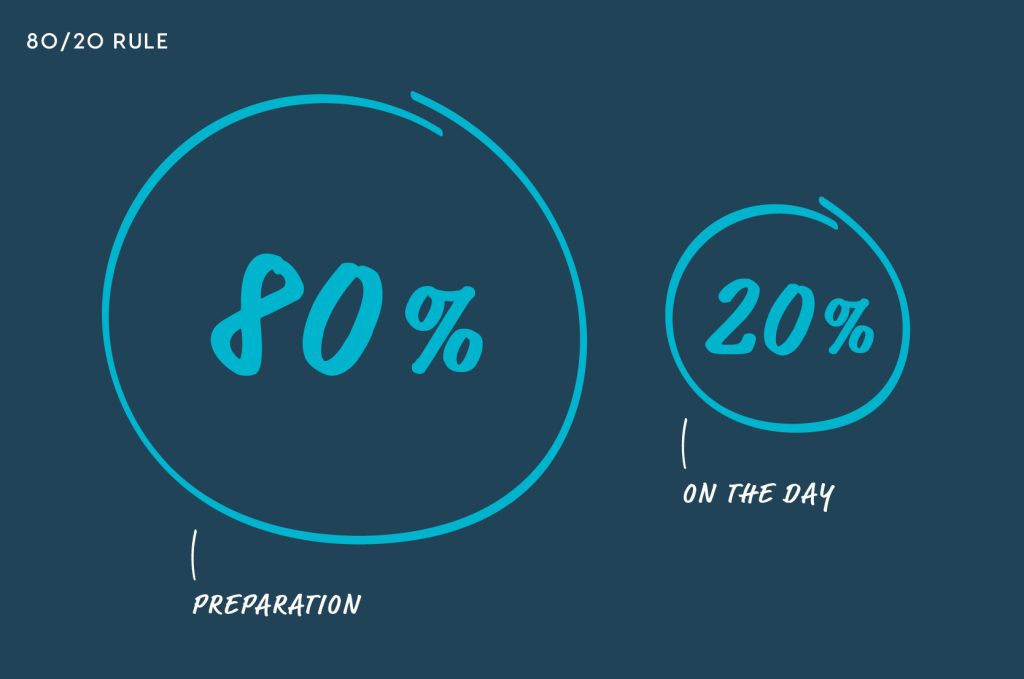
Think of the 80/20. Here, 80% of your work is done before entering the room. It’s the research, a tailored structure and slides, editing, refining, editing, and refining again. The other 20% is rocking up on the day to facilitate a great session.
Factor in time to do the 80% well before the workshop. You’ll always have last-minute ideas and additions, which we’ll come to later.
Some prefer a cookie-cutter workshop approach. They know what they’re selling and deal with it on the day. However, this approach must be carefully considered, based on the client’s findings, and tailored to the challenge.
Don’t get me wrong – I use ideas and slides from other workshops, but it’s a framework that adapts and evolves based on the client’s needs.
Build it, and they will come (reference for Kevin Costner fans out there)
Map out an agenda or framework that guides everyone towards achieving the objective. Don’t be afraid to add too much info; the key is getting stuff down on paper or slides. Next, work out the time required for each section, and don’t forget to add an extra time buffer for each.
I did not do this early on and paid the price as conversations and ideas flowed. We ran over and never covered everything we set out to do.
I try not to interrupt people while discussing an idea. That flow state can produce beautiful thoughts that others can build on. However, if it’s just waffle, you can gently move the conversation on.
Now that you have your timings and structure, add the content while considering how you want the session to end. Will it be a recap of all the work or a bit of a reveal?
When adding content to the slides, PLEASE, PLEASE, PLEASE, do not produce copy-heavy slides.
It shouts (to me anyway), “I don’t have full confidence here, so I put up lots of copy so I can read it, or you can while I waffle on”. I’ve done it in the past, so we’re all guilty.The only time I do it now, but not with lots of copy, is if I want a group to work on something. Then, I’ll have some of the instructions on the slide. Less is more
Edit, simply, refine and repeat
Your job running a workshop is to keep things moving while avoiding death by keynote (or PowerPoint if you must).
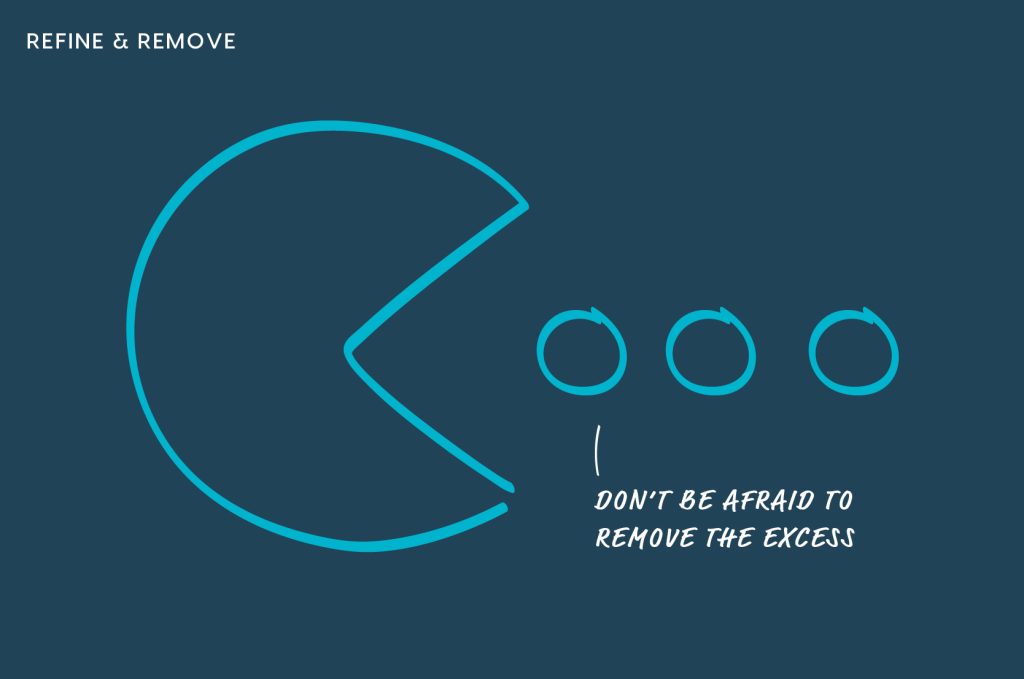
You might have the best 60-page workshop deck, but you need to go through and edit it. Duplicate your mammoth deck and simplify it repeatedly without losing its meaning or flow.
It will take practice, but practising what you have in a time slot will aid your decision-making. You can even phone a friend to sound out if it makes sense.
Practice, but not too often
I know the saying ‘practice makes perfect,’ but if you practise too much, you become robotic and dull – the opposite of what you want.
I review the refined slides and add bullet points to the slide notes. A simple glance at these can help you bring it back on track.
I know folk who like to script what they will say. I tried it, and I found that I never stuck to it. The energy in the room and the conversations can take you to many other places; for me, it should feel natural.
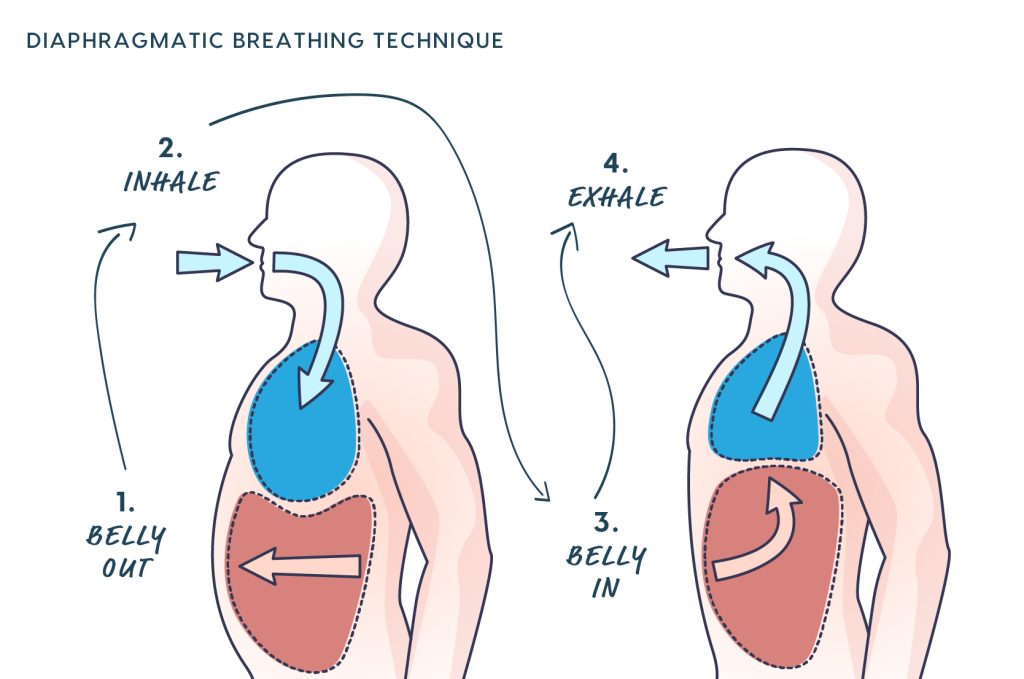
Speaking it out loud to yourself makes a big difference, and knowing how to regulate your breathing is crucial.
I worked with Kirsty Strain on setting intentions within the content and around diaphragmatic breathing to ensure that you come across as confident and relaxed, not someone trying to perform. It’s fantastic and worth checking out how Kirsty can help you.
Knowing the space
It’s taken a wee while, but now I always check the setup in these spaces with the people who know it best.
Things like: Does it have windows (for sticking Post-it notes), a blank wall (for flip-chat paper), a screen / TV (essential), flip-chat, a whiteboard or a whiteboard wall, coffee or tea on hand, etc.?
Even beyond that, if it’s over lunch, will the client provide lunch, or do people have to bring their own? If so, we need to tell them.
I’ve conducted workshops in the backroom of a pub for a new drinks brand, in large corporate offices with whiteboard walls, and small charity spaces without screens. No matter what, you create a culture of trust in these engaging workshops.
Finding someone within the company who can help organise this is crucial to your success. This person might be part of the admin team, EA, or someone who seems to sort things out.
Getting ready for the day
I like to email folks who are coming to the workshop.
I might send the agenda, share some homework, or suggest things I’d like to consider before joining.
Plus, it gives you a chance to share that you’re looking forward to running “X” and that you’ll be there early if anyone has any questions beforehand.
For the day, I’ll bring coloured Post-Its (more on that soon), some pens (for me), a notebook, scrap paper, and some MacBook connectors as a backup. That’s it. Well, maybe some snacks. I no longer bring Sharpies, as people prefer to use their pens.
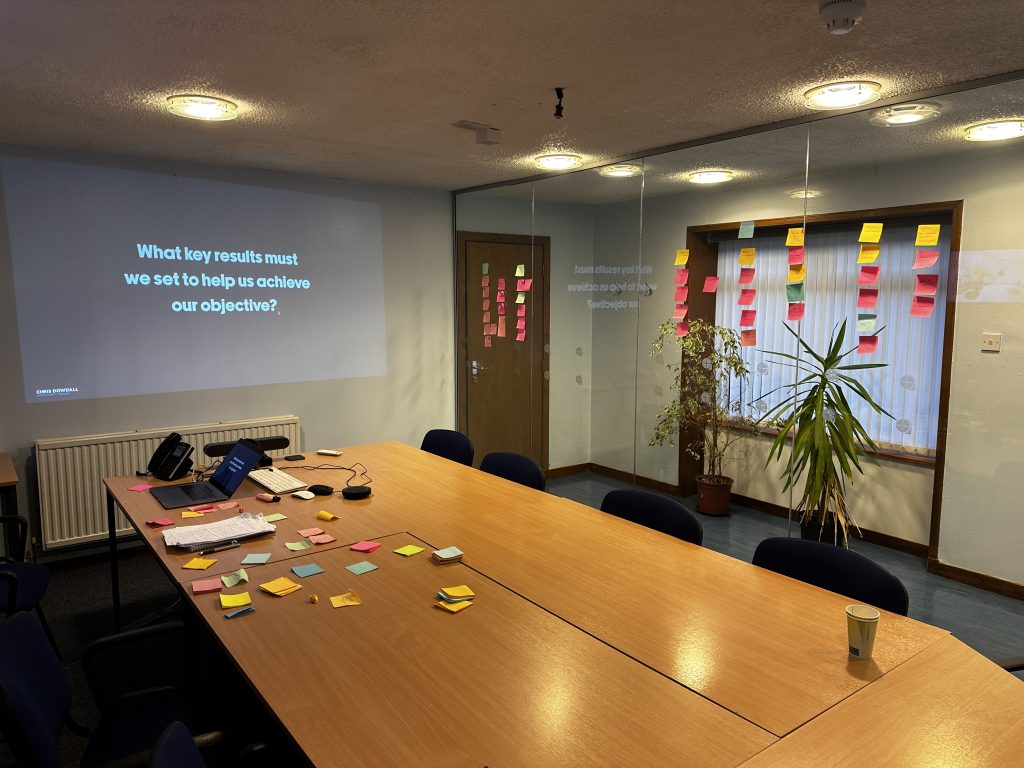
80% Prep is done… now it’s workshop day
Get there early – at least 30 minutes – so you can get set up. Grab a coffee, lay things out, and check that the screen and deck work.
The calmer and more comfortable you are, the more everyone will feel that.
Those who know me know I’m a little OCD with my Post-it notes.
Nothing beats articulating an idea or issues on tiny square pieces of paper that can be moved around later.
Here’s how I organise ideas with coloured Post-it notes:
- Blue for out-of-the-box thinking
- Green for objectives or tasks
- Yellow for solutions or ideas
- Pink for issues or pain points
- Orange for points of disagreement or topics needing further discussion
Setting ground rules
Establishing some basic guidelines before kicking off can prevent headaches later. Here are a few I use:
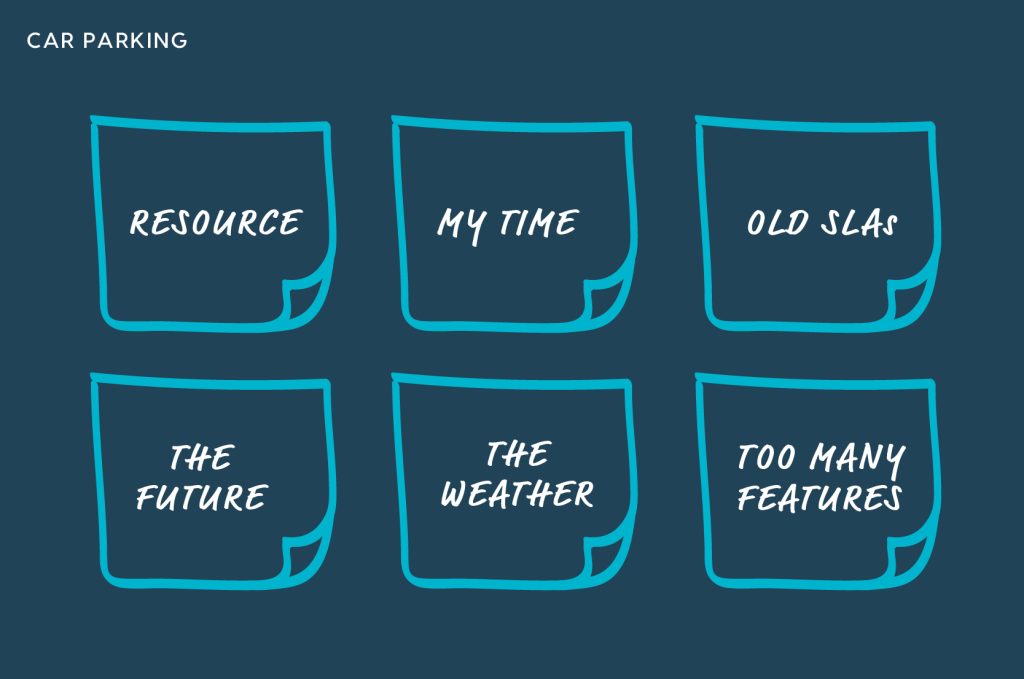
Car Parking: If we’re stuck on a path we can’t resolve and emotions run high, I designate a space for coloured Post-its. If time allows, we can park these ideas/issues there to revisit at the end. I show them the designated area on the wall or glass. This helps clear the way for progress.
R-E-S-P-E-C-T (Aretha knew best): Sharing ideas is like holding a delicate bubble – we must handle them with care as they can pop at any moment. This means respecting everyone’s contributions and building on them, not shooting them down. If there’s a negative person in the room, we might use the six hats technique (ask me about this if you’re curious).
Safety First: Sometimes, you might need to cover fire exits, but when I visit other workplaces for workshops, I usually say, “I’ll follow your lead.” For off-site meetings, you’ll need to cover the basics for everyone – pointing out emergency exits, etc. These simple rules can create a more productive and respectful session.
A natural approach to meet and greet
Gone are the days of forced icebreakers. My preferred method is more natural, with a personal welcome. I greet people as they arrive, let them settle in, engage in light small talk, and share a few (hopefully) funny exchanges. Humour helps to put people at ease. Once everyone feels comfortable, I ask people to introduce themselves, and then I do the same.
I avoid traditional icebreakers as, through experience, they can feel awkward, especially in a room of introverts. Instead, a relaxed conversation helps me quickly identify who the talkers and observers are.
If you must use an icebreaker, make it relevant to your session. For example, in a customer targeting workshop, I used “Guess Who.” Participants had to ask strategic questions to identify target customer groups. It became surprisingly competitive and effectively set the workshop’s tone.
The key is creating a comfortable, natural environment that encourages genuine interaction.
Kick-off & rock on
Now it’s over to everything you’ve prepared. Here are a few things to consider:
- You’ll be wearing multiple hats as you must juggle various roles, which can be tricky; the more you do it, the better you become. The active listener, the timekeeper, the idea capturer, and the judge of when to share your thoughts could sway the direction.
- You’ll have to handle challenges gracefully, especially if someone questions part of the process. Discuss it briefly and then use the parking technique to move forward.
- You’ll have to keep the pace lively. If we’ve achieved a goal or the group is stuck, I offer breaks or move on early.
- You’ll have to watch out for those trying to speak but struggling to be heard. You help to create a space for everyone to contribute.
Remember, perfection isn’t the goal in these sessions. They’re for capturing ideas; refinement comes later. Don’t worry if things don’t go exactly as planned.
Wrapping Up
Thank everyone, and highlight what you set out to achieve and accomplish together.
Before removing anything, take photos of all Post-it notes, whiteboards, and paper sheets. These visual records will be crucial for later review.
Collect the original written materials and ensure you leave as you found it.
Your next task is to process the insights and ideas, carefully refining the information for future presentations to the group or leadership team.
Before then, be kind to yourself after the workshop. Don’t be surprised if you feel exhausted afterwards. It can be mentally demanding and can drain your energy significantly. It’s completely normal to feel tired after such an intense collaborative session.
Take some time to recharge and reflect on the sessions and your success.
Check out my other blogs and resources to help you become more confident and culture-led here

Ready to explore your best route? Take the ten-minute culture quiz. Or book a call and let's have a wee chat on how to move forward together.