
Learn how to master brand interviews
After completing another round of brand interviews, this time with 29 people, I’m excited to share some thoughts on how to do these interviews effectively and why they’re critical for strategic growth.
First, let’s tick off the basics
It’s part of a larger process: It sounds obvious, but it is worth stating that this isn’t a standalone activity. It’s part of my 5D process, specifically the discovery phase. The board must understand why you’re doing it, who’s involved, and what the report will deliver. In my approach, strategic recommendations are based on the interests of teams, stakeholders, and customers.
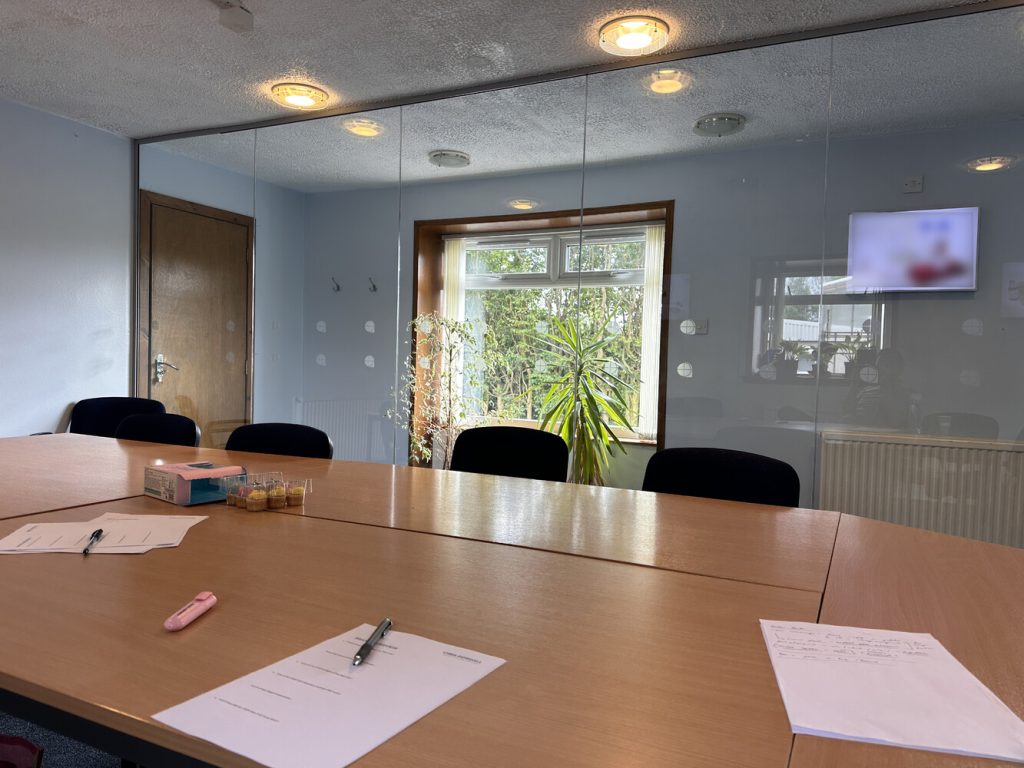
An internal champion: You need someone on the inside, not like a mole, but someone who knows the organisation and everyone in it. This could be an executive assistant, head of admin/people, or the go-to person for support. They’re crucial for managing the one-hour booking in the diary and a meeting room, plus ensuring participation. I cannot stress this enough.
One-on-one and in-person: While online is great, the value of sitting across from one another, seeing their body language, and reading the other subtle cues is way better than virtually. Recently, another creative joined me to capture notes and prompt follow-up questions, which worked well.
Buffer time: Allow space between interviews to capture notes, breathe, think, prepare for the next one, and, of course, breathe again.
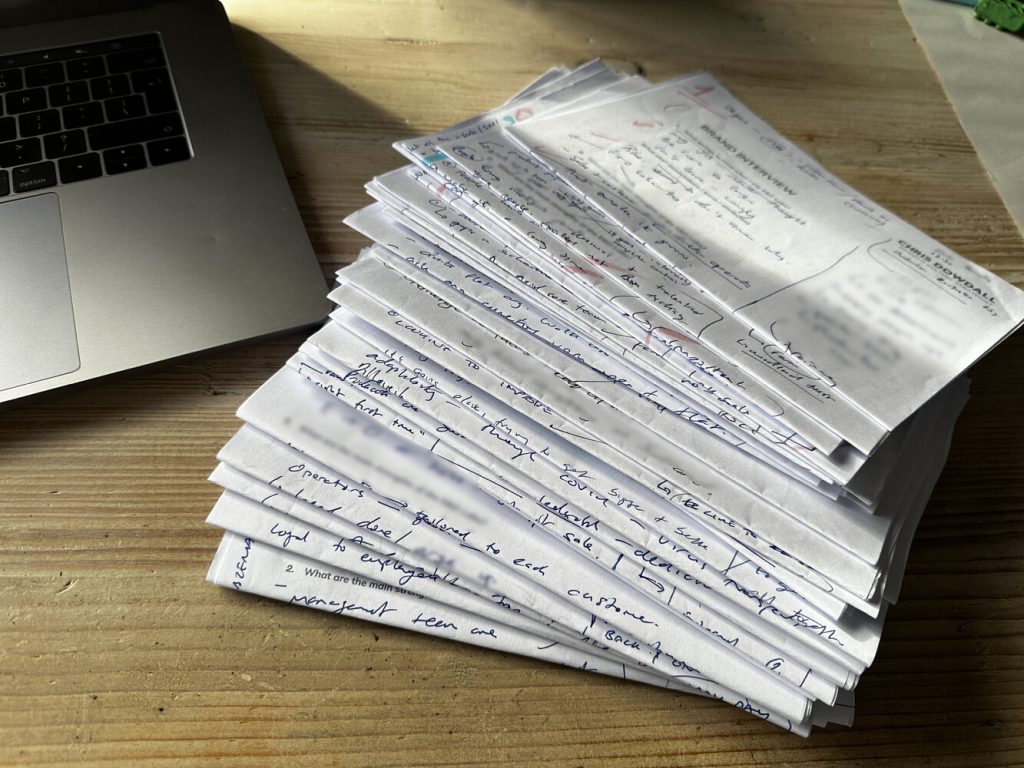
Printed questions: Despite the digital age, I prefer writing notes on paper alongside printed questions. Plus, writing/taking notes enhances understanding and retention of what’s being said, which is pretty cool.
Basics covered. Now it’s time to craft and ask questions.
Tailor your approach: Customise your questions based on what you want to achieve or understand. Use base templates like “What are the brand’s strengths?” or “What keeps you up at night?”
Open-ended questions are better: Use prompts like “Can you describe…” or “Tell me how that made you feel?” This invites detailed responses rather than simple yes/no answers, as they make you and them feel very awkward.
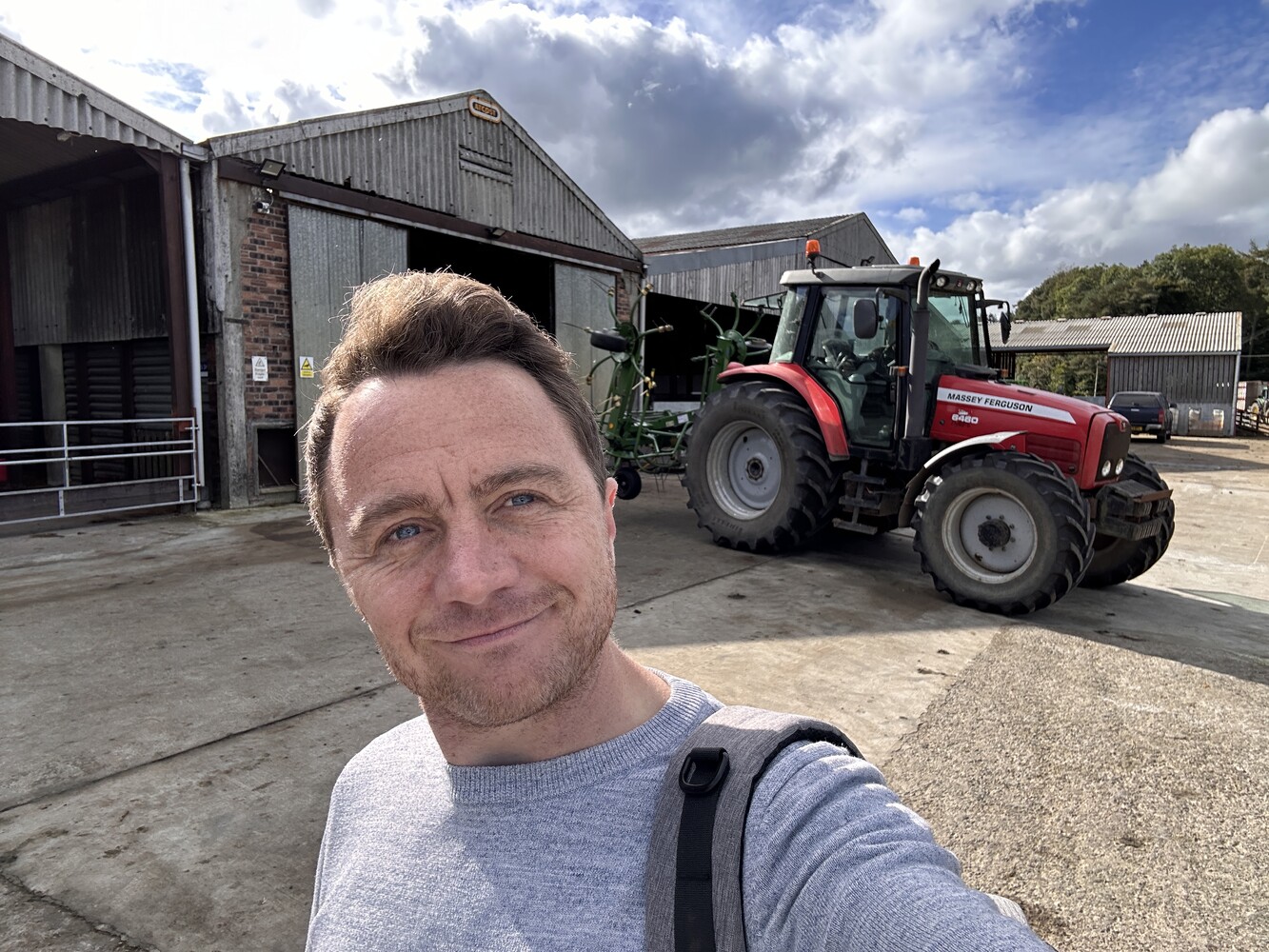
Be early and settle in: I’ve interviewed people in boardrooms, training rooms, small offices, canteens, and even on a farm. Arriving early helps you set up comfortably because you’ll put others at ease if you are comfy.
Ask, be quiet, listen, and nod: We’re there to observe more than participate. Be patient and show you’re listening through body language. Follow up on cues and repeat what you’ve heard to confirm understanding. It sounds simple, but it takes time.
Get to know them: I nearly forgot this, but we’re all humans who crave connection and love to talk about ourselves. Of course we do. Use ten minutes to get to know one another; ask them how long they have worked or used the brand. Simple everyday things..
Now find the Zebras, Leopards, Giraffes etc 🦓 🐆 🦒
Grouping key patterns or themes is the next stage. Here’s how I approach it:
Cluster groups: Identify recurring themes like lack of clarity around direction, communication issues, or customer misunderstanding of the brand. Once you look, you’ll spot a zebra over a leopard over a group of giraffes. You get the idea.
Software can help: I’m not an Excel fan, but use it for this process. I create tabs for each question and input summarised data from each interviewee. I then use colour coding as it helps visualise groupings. Some folk use AI tools like ChatGPT to analyse feedback and suggest good patterns. However, you must do the legwork and find patterns before relying on AI tools.
Embrace tension: You’ll encounter both extremely positive and negative responses. While these extremes are insightful, look for clusters representing broader organisational views.
Distillation: Use your judgment to identify the most important insights for the playback session. More on that in a second.
The Playback Session
Presenting findings to the board is crucial. Here’s how to approach it:
Actionable items: Distil your findings into 6-10 actionable points with potential solutions for each. Never share a problem without a potential way out.
Storytelling: Create a presentation with slides for each question, highlighting top-level findings. Use quotes to bring insights to life. Keep slides short, simple, and easy to understand.
Executive summary: Include a summary slide showing the 6 – 10 main issues, followed by individual slides with the issue spelt out alongside actionable next steps.
Proofread: Review your work and ask others to check it. A fresh perspective can catch overlooked details and offer other ideas you might have missed.
How long: I book at least 2 hours for the playback session. The trick is to keep the conversation flowing and on track.
Follow-up: After the session, share notes and an agreed action plan based on the discussions in the room.
In Summary
As part of a larger strategy, this interview process helps you get to the heart of an organisation.
It’s a privilege to assist businesses in this way and to meet their people. While perfecting this skill takes time, the more you practice, the more comfortable you’ll become with one-on-one and group discussions.
And remember to enjoy the journey 😊

Ready to explore your best route? Take the ten-minute culture quiz. Or book a call and let's have a wee chat on how to move forward together.